
The MADS Process
From idea to launched product.
Five clear stages take an app idea from first signal to a growing product. We test demand before we build, so effort goes into apps people actually want.
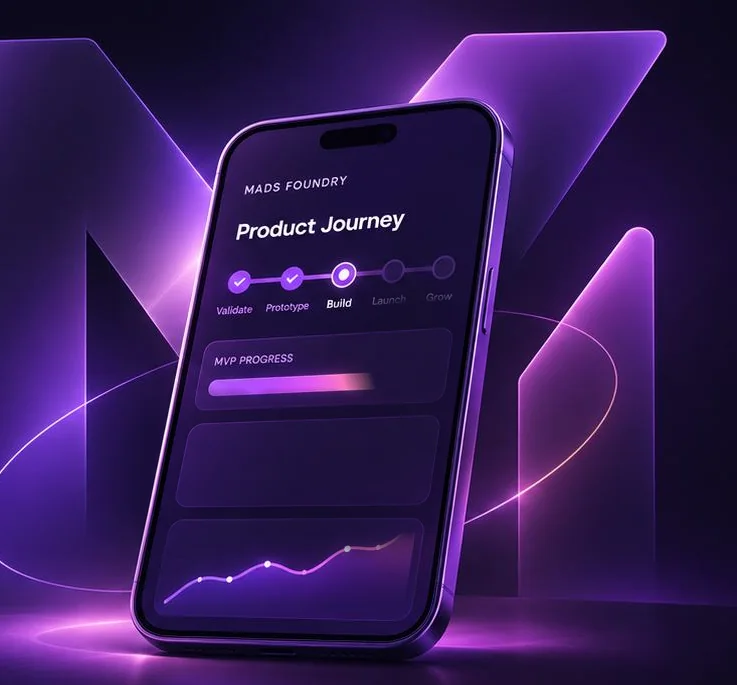
Five stages
One clear path, from first signal to growth.
Each stage has one job and ends with something concrete, so everyone knows exactly what moves the product forward.
Stage 01
Validate
Prove there is real demand.
We research the market, talk to potential users, and test the idea with lightweight experiments before committing to a build.
DeliverableA validated concept and a clear go or no-go decisionStage 02
Design
Shape an experience people get instantly.
We map the core user journey, then prototype and test it with early users until it feels simple and useful.
DeliverableA tested, clickable prototypeStage 03
Build
Ship a focused first version.
Engineers and designers build the essential features first, checking quality and performance along the way.
DeliverableA launch-ready MVPStage 04
Launch
Put the product in real hands.
We release to the market, set up analytics, and watch closely how people actually use the product.
DeliverableA live app with its first usage insightsStage 05
Grow
Double down on what works.
We iterate on feedback and data, refining features, retention, and the overall experience over time.
DeliverableAn evidence-based roadmap for every next release




Every project moves at its own pace. Timelines depend on scope and on what validation tells us.
How we collaborate
One team, every discipline.
Product, design, engineering, and growth work side by side from the first experiment, so nothing is lost in hand-offs between stages.
Shared goals from day one
Every discipline joins at validation, not after the spec is written.
Evidence settles decisions
User research and real behavior guide choices, not opinions.
Learning flows back
What we learn after launch feeds straight into the next design and build.

Product
Frames the problem and decides what to test next.
Design
Turns insight into flows people understand at a glance.
Engineering
Builds fast, stable apps that are ready to scale.
Growth
Brings in users and reads what they do.

Have an app idea worth building?
Tell us what you're working on. We'll walk you through how it could move from validation to launch.